

The Brightening Routine That Actually Works and What to Skip
The Glow Letter · Issue #12
Short answer: a brightening routine needs four things — a gentle cleanser, one brightening treatment, a moisturizer, and daily SPF. That's it. Everything else is optional, and most of what people add is either redundant or the reason their skin got irritated and made more marks.
The four steps that actually matter
1. Cleanse (morning and night). You're not scrubbing pigment off — it lives below the surface. The job is to clear the day off your skin without stripping it. A bar with actives in it does double duty: our Turmeric Papaya Soap has kojic acid and niacinamide, so a 60-second wash contributes instead of just cleaning.
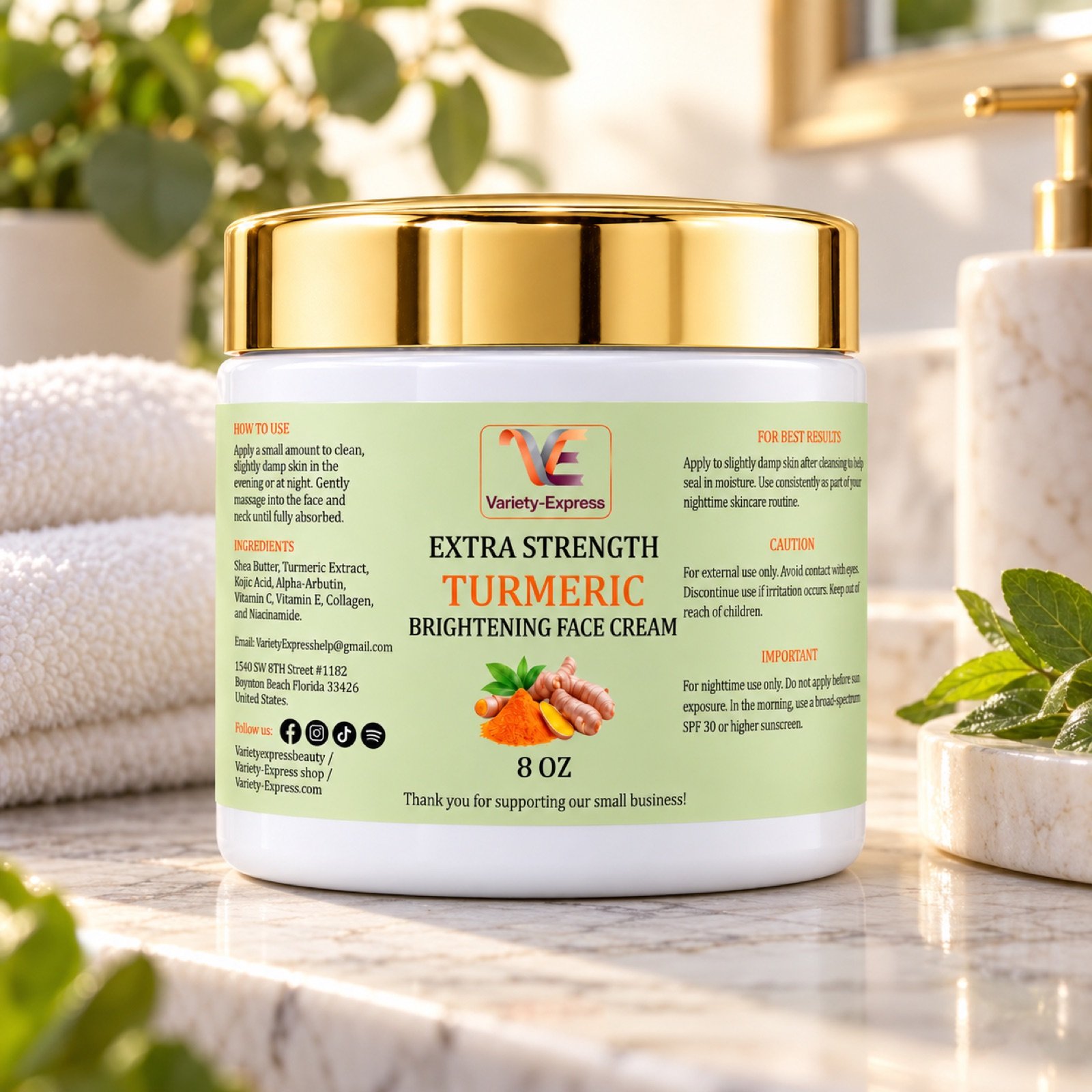
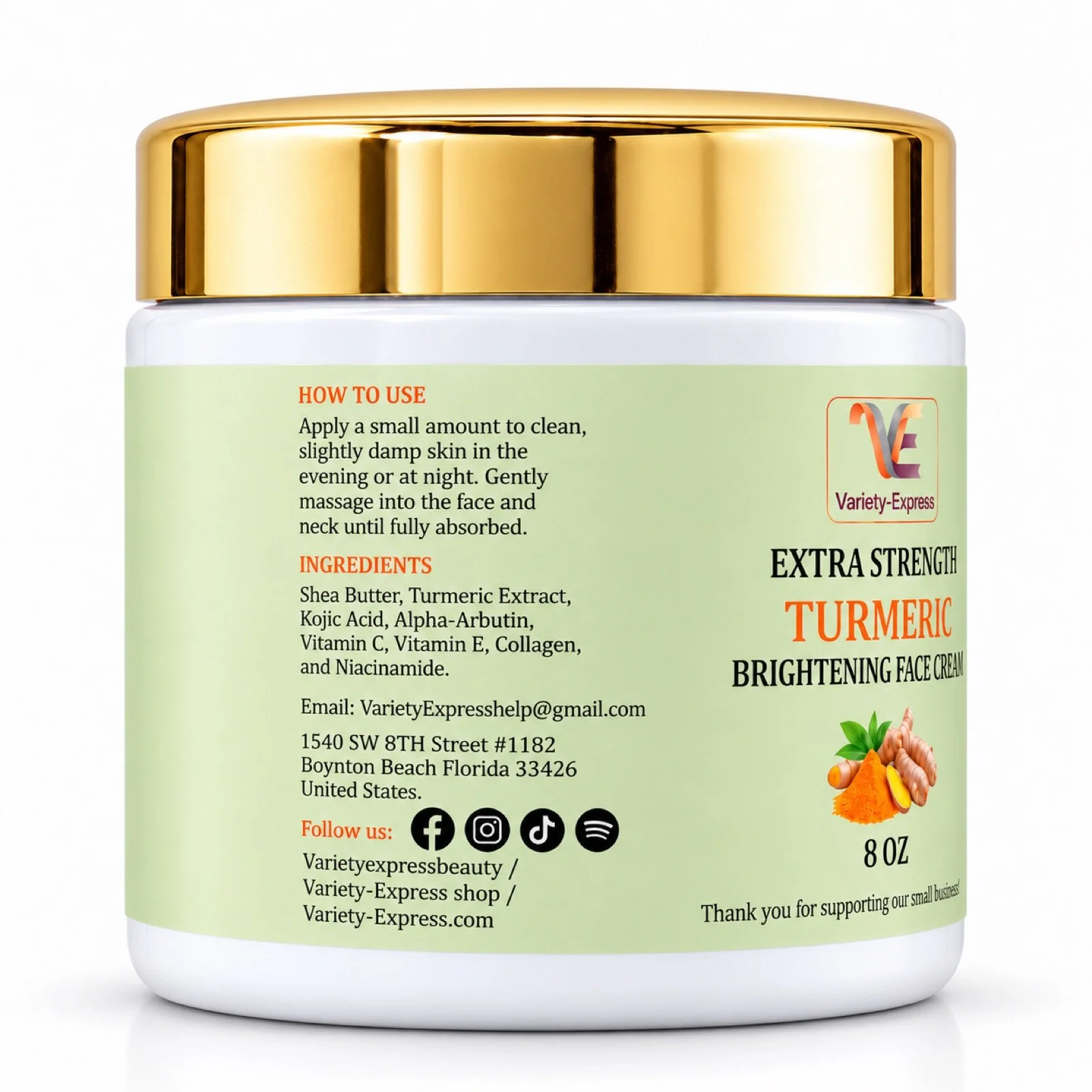
2. Treat (night). This is where the work happens, because brighteners have hours of contact time while you sleep and no UV undoing them. Our Turmeric Brightening Face Cream stacks kojic acid (works on existing marks), alpha-arbutin (gentle, good for sensitive skin), and niacinamide (evens overall tone and supports the barrier).
3. Moisturize. Dry skin looks duller and darker, and a damaged barrier gets irritated easily — and irritation makes new marks. If your treatment cream is rich enough, this step is already handled.
4. Protect (every single morning). Sunscreen is not the optional finishing touch, it's the step that protects the other three. Skip it and you're fading marks at night while re-triggering them all day. Ours is SPF 50+ with no white cast.
What you can skip
A separate vitamin C serum, if your cream already contains vitamins C and E. Layering more actives raises irritation risk without much added benefit.
Toners and essences. Pleasant, not necessary.
Weekly scrubs. On deeper skin especially, physical scrubbing causes the marks you're trying to fade.
A fifth brightening product. More actives isn't faster. It's just a faster route to a compromised barrier.
"Whitening" anything. Different goal, and where mercury and illegal hydroquinone show up.
What about body, knuckles and inner thighs?
Same four steps, one addition. Wash the area daily with the soap, moisturize, protect exposed skin — and for built-up dark patches on knuckles, elbows, knees, underarms and inner thighs, add Peeling Oil every other night on clean, dry, unbroken skin.
How long before it works?
Several weeks before tone starts looking more even. A few months for older or deeper marks. Nothing legitimate works in a week, and the timeline depends on how deep the pigment sits, how consistent you are, and whether you protect treated skin from the sun.
The practical test: photograph the same area in the same lighting every two weeks. Gradual change is nearly impossible to see in the mirror day to day, and most people quit right before it shows.
The most common mistakes
Skipping sunscreen. The number one reason routines stall.
Product-hopping every two weeks. Consistency beats intensity, every time.
Starting everything at once, then not knowing what caused the reaction.
Using strong actives on irritated or freshly shaved skin.
Expecting a cleanser to do a treatment's job. Wash-off products have seconds of contact; leave-on products have hours.
Common questions
Morning or night for brightening products? Night for treatment, morning for protection. If you use a brightener in the morning, sunscreen is non-negotiable.
Can I use the soap on my face and body? Yes, both. Once or twice daily, and start every other day if your skin is sensitive.
Do I need to stop when my spots fade? Keep the sunscreen and cleanser going. You can scale back the treatment step to a few nights a week to maintain.
What if my skin stings? Stop, simplify to cleanser and moisturizer for a week, then reintroduce one product. Stinging that doesn't settle is irritation, and irritation makes marks.
Ready-made: the Dark Spot Starter Routine bundles the soap, cream and SPF 50+ together.
This article is for general education and isn't medical advice. If you have a skin condition, talk with a dermatologist.
Turmeric, Papaya and Shea: The Heritage Behind Brightening Skincare
The Glow Letter · Issue #11
Short answer: the ingredients in our jars are not new discoveries. They're kitchen and market remedies that generations used, and modern research later explained. Here's where turmeric, papaya, shea and the rest come from, what the science says they do, and where tradition needs a modern upgrade.
Turmeric: South Asia
Turmeric has been used in South Asian skincare and ceremony for centuries — the pre-wedding haldi ceremony is still a living tradition. Brides are covered in a turmeric paste for glow before the wedding day.
What the science says: curcumin, turmeric's active compound, is studied for antioxidant and anti-inflammatory properties, which is why it shows up in products aimed at dull, irritated or uneven-looking skin.
The modern upgrade: raw turmeric paste stains, and its actives absorb poorly on their own. A formulated cream pairs turmeric extract with brighteners that penetrate — which is why our Turmeric Brightening Face Cream combines it with kojic acid, alpha-arbutin and niacinamide.
Papaya: the Caribbean, West Africa and the Philippines
Green papaya has been rubbed on rough skin, dark patches and scars across the Caribbean, West Africa and Southeast Asia for generations. Papaya soap is a staple in Filipino and Caribbean households.
What the science says: papaya contains papain, an enzyme that breaks down the proteins holding dead surface cells together. That's gentle enzymatic exfoliation rather than scrubbing — which matters on deeper skin, where scrubbing causes marks.
The modern upgrade: fresh fruit is inconsistent and messy. A standardized extract in a soap or a targeted peeling oil delivers the same idea at a predictable strength.
Shea butter: West Africa
Shea has been harvested and hand-processed by women's cooperatives across West Africa — Ghana, Burkina Faso, Mali, Nigeria — for centuries, for skin, hair and cooking. It's often called "women's gold" because the trade has long been run by women.
What the science says: shea is rich in fatty acids and vitamin E, and it works as an occlusive and emollient — it holds moisture in and softens. A healthy, moisturized barrier is also less reactive, which means fewer new marks.
The modern upgrade: raw shea is heavy and grainy on the face. Blended into a cream, you get the barrier support without the greasiness.
Kojic acid: Japan
Kojic acid came out of the rice fermentation used to make sake, miso and soy sauce. Workers handling the ferment were observed to have notably even-toned hands, and the compound was isolated from there.
What the science says: it interferes with tyrosinase, the enzyme that drives melanin production, so it works on the look of existing dark marks. It's the most direct brightener in our lineup.
The modern upgrade: kojic acid can be drying or irritating alone, so pairing it with shea butter and humectants is what makes it usable long enough to matter.
Rosemary: the Mediterranean
Rosemary has a long history in European and Middle Eastern hair care, traditionally as an infused oil or rinse for the scalp.
What the science says: rosemary oil is one of the better-studied plant oils for scalp use, and it's why it anchors our Hair Growth Blend Oil alongside castor and peppermint.
Where tradition needs a correction
Respecting heritage doesn't mean repeating everything. Some traditional and modern-marketed "remedies" cause real harm:
Lemon juice straight on the skin burns and can cause a blistering reaction in sunlight.
Baking soda wrecks the skin's pH and barrier.
Mercury-containing "whitening" creams still circulate in some communities. Mercury poisoning from skin cream is documented and serious. If a cream promises results in days and won't list ingredients, don't use it.
Skin bleaching as a beauty standard is a different thing from evening your tone, and it's not what we make.
The honest summary
Heritage tells you what works. Formulation tells you how much, how often, and how to keep it from irritating you. Our products are that combination: ingredients people have trusted for generations, measured into formulas that are consistent, gentle enough for daily use, and free of hydroquinone and mercury.
Build the routine: Turmeric Papaya Soap · Turmeric Face Cream · SPF 50+
This article is for general education and isn't medical advice. Patch test new products, and talk with a dermatologist about persistent skin concerns.
Does Skincare Work Differently on Deep Skin Tones?
The Glow Letter · Issue #10
Short answer: skin is skin — but melanin changes how it reacts. Deeper skin doesn't need "special" products so much as it needs products that respect one fact: any irritation tends to leave a dark mark behind. That single difference should shape every choice you make.
Does deeper skin actually behave differently?
In the ways that matter for a routine, yes:
More active melanocytes. Not more cells, but more pigment production. So when skin is injured — a pimple, a bug bite, a burn from a harsh scrub — it often responds by making extra pigment in that spot. That's post-inflammatory hyperpigmentation, and it's why a breakout that lasts four days can leave a mark that lasts four months.
A stronger scarring response in some people. Keloids and raised scars are more common on deeper skin, which is a reason to be careful with aggressive at-home peels and picking.
Dryness shows differently. Deep skin often reads "ashy" rather than red when it's dry or barrier-damaged, so the warning sign is easy to miss.
Sun damage is real but quieter. Melanin gives some baseline protection — nowhere near enough — and because burns are less visible, damage accumulates without the obvious warning.
Does darker skin need sunscreen?
Yes, and this is the myth that costs people the most progress. Melanin offers limited natural protection, roughly in the range of a very low SPF, which does not prevent UV from deepening existing dark marks. If you are treating hyperpigmentation at night and skipping protection in the morning, UV re-triggers the pigment you just worked on.
The reason people skip it is usually the white cast, not the concept. That's a formula problem, not a you problem. Ours is SPF 50+ that absorbs clear with no ashy finish.
What to avoid on deeper skin
Harsh physical scrubs. Micro-injury plus melanin equals more marks.
Unregulated "whitening" creams. Products promising results in days are where illegal hydroquinone and mercury turn up. Mercury poisoning from skin creams is a documented problem, and the damage is not cosmetic.
Stacking strong actives all at once. Introduce one product at a time so irritation doesn't cascade into new pigment.
Picking. Every squeezed pimple is a future dark spot.
Why brightening products are a different thing from bleaching
Brightening means evening the look of spots and marks so your tone looks consistent. Bleaching means trying to lighten your natural complexion. We formulate for the first, and everything we make is designed to work with the skin you have, on every skin tone. No hydroquinone, no mercury.
A routine built around that one fact
Because irritation makes marks, the routine should be gentle and repeatable:
Cleanse with something that treats while it washes — Turmeric Papaya Soap.
Treat at night with a gradual brightener stack — kojic acid, alpha-arbutin and niacinamide in our Turmeric Brightening Face Cream.
Protect every morning with SPF 50+.
Target stubborn areas — knuckles, elbows, knees, inner thighs — every other night with Peeling Oil, never on broken skin.
The research gap, said plainly
Historically, dermatology research underrepresented deeper skin tones, and a lot of textbook images show conditions on pale skin. That's improving, but it means many people have been told to "just use sunscreen" without anyone addressing white cast, or handed treatments never tested on skin like theirs. If a product or a professional can't tell you how something behaves on deep skin, that's a fair reason to look elsewhere.
Common questions
Do I need different ingredients than someone with lighter skin? Mostly no. The same brighteners work. What changes is caution: gentler, slower, and always with sun protection.
Why do my dark marks last so long? Because the pigment sits deeper in the skin than the original blemish did. Months, not days, is normal.
Is retinol safe for deep skin? It can be, but irritation is the risk, and irritation makes marks. Start low, go slow, and don't combine it with other strong actives at first.
Are "for dark skin" products a gimmick? Sometimes. What's genuinely different is formulation choices like no white cast and gentle exfoliation — not a separate category of ingredient.
This article is for general education and isn't medical advice. If you have a skin condition, talk with a dermatologist — ideally one experienced with skin of color.
Dark Underarms and Inner Thighs: What Helps, What Makes It Worse
The Glow Letter · Issue #9
Short answer: dark underarms and inner thighs are usually friction, shaving irritation and trapped sweat, not dirt. You cannot scrub them away, and harsh scrubbing makes them darker. What helps is reducing the rubbing, switching how you remove hair, washing daily with a gentle brightening bar, and treating the area a few nights a week — then protecting it from the sun.
What causes dark inner thighs and underarms?
Skin darkens where it is repeatedly irritated. The usual causes:
Friction. Thighs rubbing together, tight jeans, leggings and waistbands, or a bag strap under the arm.
Shaving and hair removal. Razor burn, ingrown hairs and waxing irritation all leave marks behind, especially on deeper skin.
Sweat and trapped moisture. Heat, gym clothes and non-breathable fabrics.
Deodorant irritation. Some formulas sting freshly shaved skin, and that irritation turns into pigment.
Weight changes and hormones, which change how skin folds and rubs.
There is also a medical cause worth naming: acanthosis nigricans, a velvety, thickened darkening in body folds that can be linked to insulin resistance, PCOS or thyroid problems. If the area feels thick and velvety rather than flat, or it came on quickly, see a doctor before buying any product. No cream fixes that, and knowing it matters more than fading it.
What makes it worse
Scrubbing hard. Aggressive exfoliating creates more irritation, which creates more pigment.
Bleaching creams. Products promising to "whiten" in days are where illegal hydroquinone and mercury show up. Skip them.
Home remedies that burn. Undiluted lemon juice and baking soda damage the skin barrier on thin underarm skin.
Shaving dry or with a dull razor.
Skipping sun protection on the skin you just treated.
What actually helps
1. Cut the friction first. Looser clothing, breathable cotton underwear, and anti-chafe balm or fitted shorts under dresses. This step alone stops new darkening.
2. Change how you remove hair. Shave with the grain using a fresh blade and plenty of slip, or switch to trimming, or space out waxing. Let irritated skin calm down before treating it.
3. Wash daily with a gentle brightening bar. Our Turmeric Papaya Brightening Soap has turmeric, papaya, kojic acid and niacinamide, so it cleans and works on tone without stripping. Massage for 30 to 60 seconds, rinse, pat dry.
4. Treat every other night, not nightly. Roll a thin layer of Peeling Oil onto clean, dry skin. Same product people use on knuckles, elbows and knees. Skip broken, freshly shaved or irritated skin, and stop if you get stinging that does not settle.
5. Moisturize. Dry, tight skin looks darker. A little Turmeric Brightening Cream keeps the area comfortable while you work on tone.
6. Protect exposed areas. Inner thighs see sun at the beach and pool, and treated skin darkens faster in UV. Use SPF 50+ on anything uncovered.
The soap and peeling oil together are the two steps that do the most work, which is why we sell them as the Dark Knuckles & Body Kit.
How long does it take?
Several weeks before tone starts looking more even, and longer for areas you have been treating for years. The friction fix is what stops it coming back. Photograph the area in the same light every two weeks, because week-to-week change is hard to see.
Common questions
Can I use deodorant after the Peeling Oil? Wait until morning, and use it on calm, unbroken skin. If your deodorant stings, that is irritation, and irritation is what caused the darkening.
Is it safe on the bikini line? Use it on the outer thigh and groin crease, not on mucous membranes or genital skin. Patch test, keep it off freshly shaved skin, and stop if it stings.
Will it lighten my natural skin tone? No. It evens the look of darkened patches so the area matches the rest of you.
Do I need a separate underarm product? No. The same soap and peeling oil work on underarms, inner thighs, knuckles, elbows, knees and toes.
What if it is thick and velvety? See a doctor about acanthosis nigricans before treating it cosmetically.
This article is for general education and isn't medical advice. If the darkening is sudden, thick or velvety, or comes with other symptoms, talk with a doctor.
Turmeric vs Papaya Soap: Which Is Better for Dark Spots?
The Glow Letter · Issue #8
Short answer: turmeric works on the look of dark spots and calms irritated-looking skin, while papaya gently exfoliates the dull surface layer. Neither one is "better" — together they do more than either does alone, which is exactly why our bar contains both.
What does turmeric soap do?
Turmeric contains curcumin, which is why turmeric shows up in brightening skincare worldwide. In a soap, turmeric is there to help skin look brighter and more even over time, and to calm the look of redness and irritation.
What it does not do: bleach your skin or remove pigment in a week. A wash-off product has limited contact time with your skin, so soap is a supporting step in a routine, not the whole routine.
What does papaya soap do?
Papaya contains papain, an enzyme that loosens dead surface skin. That gentle exfoliation is what makes skin look duller or rougher before, and smoother and more reflective after. Because it clears the surface, papaya also helps the products you apply afterward absorb better.
Turmeric vs papaya: side by side
Turmeric evens the look of tone and calms the look of irritation. It works on dark marks, uneven tone and dullness, and feels comfortable rather than stripping. Best as your ongoing daily brightening step.
Papaya exfoliates dull surface skin. It works on rough texture, flaky skin and buildup, and leaves skin feeling polished. Best for texture, and for built-up areas like dark knuckles and elbows.
Is turmeric or papaya soap better for dark spots?
For dark spots specifically, turmeric is the more direct player, especially when the bar also contains kojic acid and niacinamide — which is where most of the actual brightening work happens. Papaya's role is to clear the dead surface layer so those actives reach fresher skin.
That's why a combined bar beats choosing one: our Turmeric Papaya Brightening Soap pairs turmeric and papaya extract with kojic acid, niacinamide, shea butter, honey and vitamin E. It's paraben free, sulfate free and cruelty free, with no hydroquinone.
Does turmeric soap lighten skin?
It does not lighten your natural complexion, and you should be skeptical of any soap that claims to. What a good turmeric bar does is make dark marks look lighter and your tone look more even. If a product promises to change your skin color, that is a bleaching claim, and bleaching products are where mercury and illegal hydroquinone show up.
How to use it for actual results
Lather in your hands or on a cloth and massage over the area for 30 to 60 seconds. Rinse with lukewarm water.
Use it daily, on face and body. It works on legs, arms, back, underarms and inner thighs, not just the face.
Follow at night with Turmeric Brightening Face Cream so brighteners sit on your skin for hours instead of seconds.
Protect every morning with SPF 50+. Sun exposure is the fastest way to undo the progress you just made.
Give it weeks, not days. Tone shifts gradually. Take photos in the same lighting every two weeks.
Can I use turmeric soap on my face every day?
Most people can. If your skin is sensitive or dry, start every other day and see how it responds. Stop if you get stinging, peeling or tightness that does not settle — that is a sign to slow down, not to push through. Always patch test a new bar first.
Will turmeric stain my skin or towels?
A quality turmeric soap rinses clean and should not stain skin. Deeply pigmented bars can mark light-colored washcloths, so use a darker cloth if you are worried.
Common questions
Does turmeric soap help with acne? It can help with the look of post-acne marks and calm the look of irritation, but it is not an acne treatment. For active breakouts, see a dermatologist.
Can I use it on dark knuckles? Yes, daily. For stubborn knuckles, elbows and knees, add the Peeling Oil every other night.
Is it safe for deep skin tones? Yes. Our formulas are made for every skin tone and contain no hydroquinone or mercury.
How long does one bar last? Our bar is a full 200 g, which is roughly twice the size of the small imported bars, so daily use typically runs several weeks.
This article is for general education and isn't medical advice. If you have a skin condition, talk with a dermatologist.
Kojic Acid vs Hydroquinone: Which Dark Spot Brightener Is Safe?
The Glow Letter · Issue #7
Short answer: kojic acid is the safer choice for most people treating dark spots at home. Hydroquinone works faster but is a regulated drug ingredient with real side effects, and in the US it can no longer be sold over the counter. Vitamin C is the gentlest of the three but the slowest. Here's how they actually compare.
Is hydroquinone banned in the US?
Over-the-counter hydroquinone is no longer legal to sell in the United States. The CARES Act of 2020 removed the OTC approval for skin-lightening drugs, and the FDA has since warned companies selling unapproved hydroquinone products. Prescription hydroquinone still exists, from a dermatologist, for a limited course of treatment.
That matters because plenty of imported "whitening" creams still contain hydroquinone, sometimes undeclared, and some have been found to contain mercury. If a cream promises to erase dark spots in days and won't tell you what's in it, that is the risk you are taking.
Kojic acid vs hydroquinone vs vitamin C vs alpha-arbutin
Kojic acid — derived from fermented rice fungi. Gradual results over weeks. Can be drying or irritating, so patch test. Cosmetic, sold freely.
Hydroquinone — a synthetic drug ingredient. Fastest results. Risks include irritation, rebound darkening and ochronosis with long use. Prescription only in the US.
Vitamin C — an antioxidant, often L-ascorbic acid. Slowest of the four. Unstable, and can sting at high strengths. Cosmetic, sold freely.
Alpha-arbutin — plant-derived, related to bearberry. Gradual and gentle. Very well tolerated. Cosmetic, sold freely.
Which one should I use for dark spots?
If you are treating everyday dark marks — post-acne spots, dark knuckles, uneven tone — start with a cosmetic brightener you can use consistently for months, because consistency is what actually moves the needle. Kojic acid plus alpha-arbutin plus niacinamide covers the same job from three angles and is gentle enough to keep using.
If your pigmentation is deep, widespread, or tied to a condition like melasma, see a dermatologist. Prescription hydroquinone under supervision, for a defined stretch of time, is a legitimate treatment. Unsupervised long-term hydroquinone is not.
What we put in our products, and why
Our Extra Strength Turmeric Brightening Face Cream uses kojic acid, alpha-arbutin and niacinamide together with turmeric extract, vitamins C and E, and shea butter. No hydroquinone, no mercury. The Turmeric Papaya Soap carries the same actives in a daily wash, and the Peeling Oil is the targeted option for knuckles, elbows, knees and inner thighs.
Does any brightener work without sunscreen?
No. This is the part people skip, and it is the reason most routines stall. UV exposure re-triggers the pigment you are trying to fade, so treating spots at night and skipping protection in the morning means running in place. Wear a broad-spectrum SPF every morning — ours is SPF 50+ with no white cast on deep skin — and reapply when you are outside.
How long before I see a difference?
Expect several weeks before tone starts looking more even, and a few months for older or deeper marks. Photograph the area in the same light every two weeks; gradual change is almost impossible to see day to day.
Common questions
Can I use kojic acid and vitamin C together? Yes. They work on pigment differently and are commonly combined. Introduce one product at a time so you know what your skin is reacting to.
Is kojic acid safe for deep skin tones? Yes, and it is widely used on deeper skin. What is not safe on any skin tone is unregulated hydroquinone or mercury-containing "whitening" cream.
Will these lighten my natural skin color? No, and that is not the goal. Brightening products even out the look of dark marks so your tone looks more consistent.
Which is strongest for dark knuckles? For thick, built-up dark areas, an exfoliating approach like our papaya and kojic acid Peeling Oil usually outperforms a cream, used every other night and always with sun protection.
This article is for general education and isn't medical advice. If you have a skin condition, talk with a dermatologist.
A Simple Night Routine for Hyperpigmentation
You don’t need a 12-step routine to fade dark spots. Here’s the simple day-and-night routine we recommend for hyperpigmentation.
The Glow Letter · Issue #6
You don't need a 12-step routine to see a more even skin tone. You need the right few steps, done consistently. Here's the simple day-and-night routine we recommend for hyperpigmentation and dark spots.
First: why night matters
While you sleep, your skin isn't dealing with sun, makeup or sweat, which makes nighttime the ideal window for brightening ingredients like kojic acid and alpha-arbutin to do their thing. Mornings are all about protecting that progress.
Your night routine (3 steps)
Step 1: Cleanse. Wash your face with Turmeric Papaya Soap. Massage gently for 30–60 seconds, rinse with lukewarm water, and pat dry, leaving skin slightly damp.
Step 2: Target dark areas (every other night). If you're dealing with dark knuckles, elbows or knees, roll on the Peeling Oil for Dark Knuckles and let it absorb. Skip broken or irritated skin.
Step 3: Brighten and moisturize. Massage a small amount of Extra Strength Turmeric Brightening Face Cream into your face and neck. Kojic acid, alpha-arbutin, niacinamide and vitamins C + E work on tone, while shea butter locks in moisture overnight.
Your morning routine (2 steps)
Step 1: Cleanse. A quick wash with your Turmeric Papaya Soap.
Step 2: Sunscreen. Every. Single. Day. Use a broad-spectrum SPF 30 or higher, even when it's cloudy, even if you have deep skin, even if you're mostly indoors. UV exposure darkens hyperpigmentation and undoes your nighttime work. Reapply if you're outside for long periods.
Habits that make a big difference
Hands off. Picking at pimples and bumps creates new dark marks.
Pillowcases: change them often.
Introduce one new product at a time so you know how your skin reacts.
Patch test new products on a small area first.
Take progress photos in the same lighting every two weeks. Changes are gradual and easy to miss day to day.
How long until I see a difference?
Everyone's skin is different, and brightening is a slow process. Most people need several weeks of consistent use plus daily sunscreen before tone starts looking more even. Consistency beats intensity every time.
Your routine at a glance
PM: Cleanse · Turmeric Papaya Soap
PM (every other day): Target dark areas · Peeling Oil
PM: Brighten + moisturize · Turmeric Face Cream
AM: Cleanse · Turmeric Papaya Soap
AM: Protect · Your favorite SPF 30+
Build your routine: Turmeric Papaya Soap · Turmeric Face Cream 4 oz · 8 oz · Peeling Oil
This article is for general education and isn't medical advice. If you have a skin condition, talk with a dermatologist.
Rosemary Oil for Hair Growth: How to Use It Right
Rosemary oil went viral for a reason. Here’s how to use it for healthier-looking hair: how often, how much, and the mistakes to skip.
The Glow Letter · Issue #5
Rosemary oil went viral for a reason: it's one of the most popular natural ingredients for healthier-looking hair. But how you use it matters just as much as what you use. Here's the no-fluff guide.
Why people love rosemary oil for hair
Rosemary oil is known for stimulating the scalp. Massaging it in boosts circulation, and a healthy, well-cared-for scalp is the foundation for stronger, fuller-looking hair. It's also a favorite in natural hair care because it's lightweight and smells fresh.
Heads up: hair loss has many causes (genetics, stress, hormones, nutrition, tight styles). If you're losing a lot of hair suddenly, talk with a doctor or dermatologist.
Rosemary works better with friends
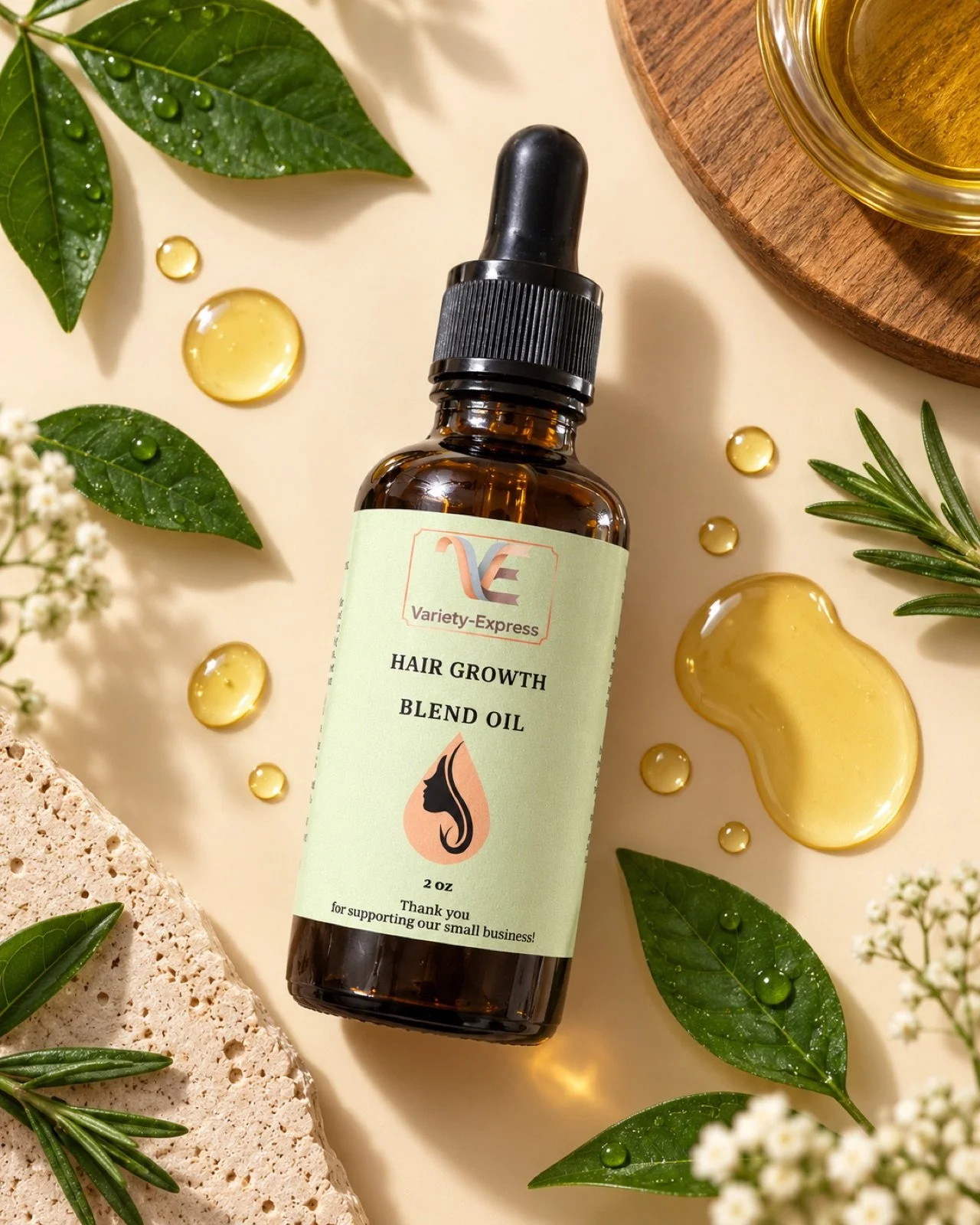
Rosemary on its own can be strong. A blend gives you more benefits and is easier on the scalp. Our Hair Growth Blend Oil combines:
Rosemary oil to stimulate the scalp
Peppermint oil for a cooling, invigorating scalp massage
Castor oil to nourish and condition, a classic for edges and brows
Jojoba oil to moisturize a dry scalp without heaviness
Vitamin E to help protect hair and follicles
Hibiscus extract for thicker, fuller-looking hair
How to use hair growth oil (step by step)
Start with damp hair or a clean scalp.
Apply a few drops directly to your scalp using the dropper. Focus on thinning areas, part lines and edges.
Massage for 2–5 minutes with your fingertips, not your nails. The massage is half the magic.
Leave it in. It's lightweight and non-greasy.
Repeat 2–4 times per week.
Bonus: Smooth a drop or two over dry ends to help with dryness and breakage.
Common mistakes to avoid
Using too much. More oil doesn't mean more growth. It just means greasy roots.
Being inconsistent. Hair grows slowly, so give it a few months of regular use.
Skipping the massage. Don't just drip and go.
Putting undiluted essential oil on your scalp. Stick with a properly blended oil.
Ignoring tight styles. Constant tension on edges works against you.
Is it good for my hair type?
Yes. The blend is made for straight, wavy, curly and coily hair, for men and women. Curly and coily hair especially loves the extra moisture from castor and jojoba.
The bottom line
Rosemary oil is a great addition to your routine when it's in a nourishing blend, massaged into the scalp, and used consistently a few times a week.
Shop it: Hair Growth Blend Oil with Rosemary & Castor Oil, 2 oz
For external use only. Avoid contact with eyes, and discontinue use if irritation occurs. This article is for general education and isn't medical advice.
Turmeric Papaya Soap Benefits for Face and Body
Your shower is the easiest place to start a glow routine. Here’s why turmeric and papaya make such a good pair in a soap bar, and how to get the most out of yours.
The Glow Letter · Issue #4
Your shower is the easiest place to start a glow routine, because you're already there every day. Here's why turmeric and papaya make such a good pair in a soap bar, and how to get the most out of yours.
Why most bar soaps leave skin feeling tight
A lot of basic bar soaps are made to do one job: remove dirt and oil. Harsh cleansing can strip skin, leaving it tight, ashy or dull, especially if you have dry skin or live somewhere hot and humid like we do in Florida.
A brightening bar should clean and treat, without that squeaky, stripped feeling.
Turmeric: the antioxidant glow
Turmeric is rich in antioxidants that help protect skin from daily stressors and support a brighter, healthier-looking complexion. It's been used in beauty rituals for generations, from pre-wedding haldi ceremonies to family remedies.
Papaya: nature's gentle exfoliant
Papaya naturally contains enzymes that help loosen dull surface skin. Think of it as a gentle polish, no gritty scrub required. Smoother skin reflects light better, so it looks brighter and more even.
What else is in our bar
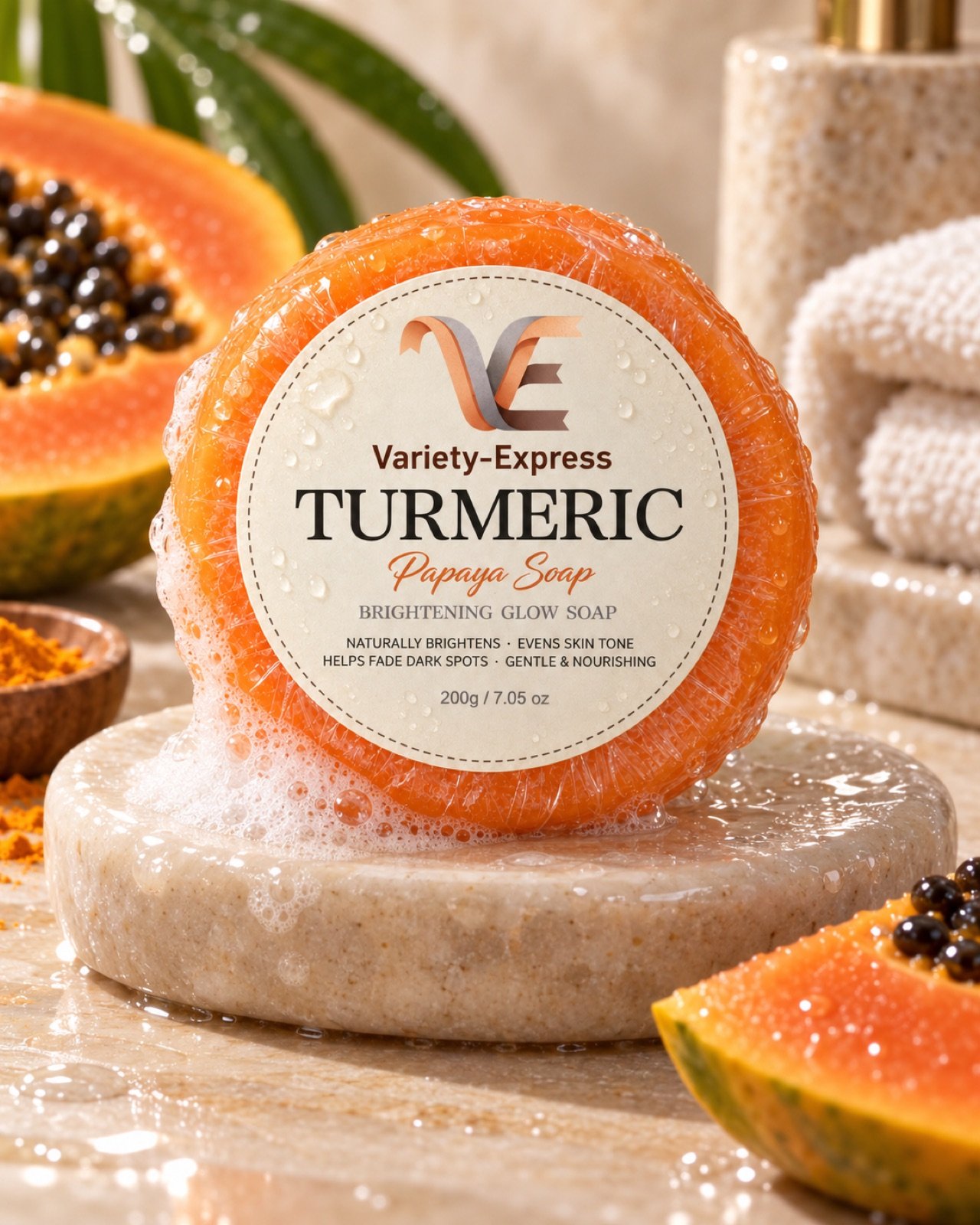
Our Turmeric Papaya Soap goes further with:
Kojic acid and niacinamide to help with the look of dark spots and uneven tone
Shea butter, honey, coconut oil and vitamin E to keep skin moisturized
No parabens, no sulfates, cruelty free
A big 200 g / 7.05 oz bar
How to use turmeric papaya soap
Wet your skin with lukewarm water. Hot water dries skin out.
Lather the bar between your hands or on a washcloth.
Gently massage onto your face and body for about 30–60 seconds so the ingredients have time to work.
Rinse thoroughly and pat dry. Don't rub.
Follow with moisturizer, and SPF in the morning.
Use it morning and night. Avoid your eyes, and stop use if irritation occurs.
Can I use it on my face?
Yes. It's made for face and body. If your facial skin is sensitive, start once a day and see how your skin feels.
Tips to make your bar last
Keep it on a draining soap dish so it doesn't sit in water.
Keep it out of the direct shower stream.
Let it dry between uses.
The bottom line
A turmeric papaya soap turns everyday cleansing into a brightening step. It combines antioxidants, fruit enzymes and proven brighteners, with enough moisture that your skin feels soft, not stripped.
Shop it: Turmeric Papaya Brightening Soap Bar · Pair it with the Turmeric Face Cream at night.
This article is for general education and isn't medical advice.
Kojic Acid vs. Alpha-Arbutin vs. Niacinamide: Which Brightener Do You Need?
Kojic acid, alpha-arbutin, niacinamide… brightening labels can read like a chemistry quiz. Here’s what each one does and whether you need all three.
The Glow Letter · Issue #3
Kojic acid, alpha-arbutin, niacinamide... brightening labels can read like a chemistry quiz. This issue breaks down what each one does, how they're different, and whether you need all three.
Kojic acid
What it is: A brightening ingredient originally derived from fungi used in fermenting rice for sake and soy sauce.
What it does: Kojic acid is known for helping fade the look of dark spots and uneven pigmentation, which is why it's a favorite for post-acne marks and dark areas like knuckles, elbows and underarms.
Good to know: It can be drying or irritating for some people, so formulas that pair it with moisturizing ingredients (like shea butter or oils) are easier to use consistently. Always patch test.
Where you'll find it: Turmeric Face Cream, Turmeric Papaya Soap and Peeling Oil for Dark Knuckles.
Alpha-arbutin
What it is: A brightening ingredient related to a compound found naturally in bearberry plants.
What it does: Alpha-arbutin targets the look of hyperpigmentation and is generally considered gentle, which makes it a great partner for kojic acid.
Where you'll find it: Our Extra Strength Turmeric Brightening Face Cream.
Niacinamide
What it is: A form of vitamin B3.
What it does: Niacinamide is the all-rounder. It helps improve the look of uneven tone, dullness, enlarged-looking pores and rough texture, and it supports your skin barrier. It plays well with almost everything.
Where you'll find it: Turmeric Face Cream and Turmeric Papaya Soap.
Quick comparison
Kojic acid: Stubborn dark spots and dark areas · Can be drying for some
Alpha-arbutin: Hyperpigmentation, pairing with kojic · Generally gentle
Niacinamide: Uneven tone, dullness, texture · Very gentle
Do you need all three?
Not necessarily, but they work well together because they help with discoloration in different ways. That's why we put all three in one night cream instead of asking you to buy (and layer) three separate serums.
How to use brighteners without irritation
Start slowly, a few nights a week, then build up.
Keep skin moisturized.
Don't stack a bunch of new actives at once.
Use sunscreen every single morning. Brighteners can't beat daily sun damage.
The bottom line
Kojic acid is the dark spot specialist, alpha-arbutin is its gentle teammate, and niacinamide keeps tone and texture balanced. Together, they make a simple, effective brightening routine.
Try all three in one step: Extra Strength Turmeric Brightening Face Cream
This article is for general education and isn't medical advice.
How to Get Rid of Dark Knuckles (and Keep Them Even)
Dark knuckles are super common, especially on deeper skin tones. Here’s what causes them and a simple routine to help your hands look more even.
The Glow Letter · Issue #2
Nobody talks about dark knuckles, but so many of us hide our hands in photos because of them. If that's you, you're definitely not alone. Here's what causes dark knuckles and a simple routine that helps them look more even.
Why knuckles get darker than the rest of your hand
Dark knuckles are very common, especially on medium and deep skin tones. A few everyday reasons:
Friction and pressure. Knuckles bend and rub thousands of times a day, and skin responds to that repeated friction by producing more pigment.
Dryness. Skin over the joints is thicker and gets dry fast. Dry, rough skin looks darker and duller.
Sun exposure. The backs of your hands get sun every time you drive, walk or type near a window.
Irritation. Harsh hand soaps, sanitizer and hot water can inflame skin over time.
If dark patches appear suddenly, feel velvety, or show up along with other symptoms, check in with a doctor, since skin darkening can sometimes be linked to health conditions.
A simple routine for dark knuckles
1. Cleanse gently. Swap stripping soaps for a nourishing bar. Our Turmeric Papaya Soap cleanses with papaya enzymes, kojic acid and niacinamide, with shea butter and honey to keep hands soft.
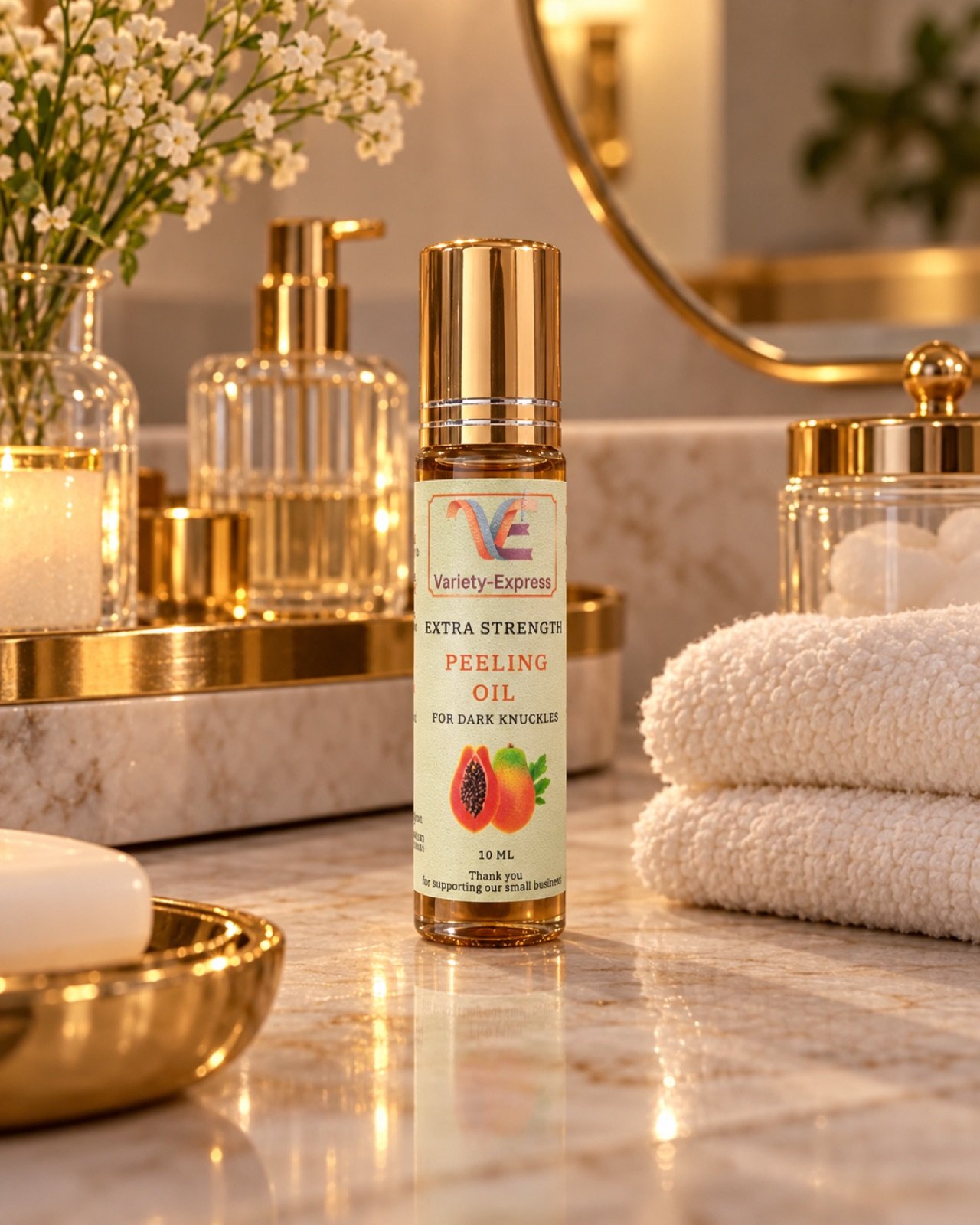
2. Target the dark areas every other day. Our Extra Strength Peeling Oil for Dark Knuckles is a roll-on made with three ingredients: papaya extract, papaya oil and kojic acid. Roll a small amount directly onto darkened knuckles (elbows and knees too) every other day and let it absorb fully.
3. Moisturize daily. Hydrated skin reflects light better and looks more even. Keep a hand cream near your sink.
4. Protect your hands from the sun. Put SPF on the backs of your hands every morning. This one habit keeps your progress from fading away.
5. Be patient. Knuckle skin is thick, so give your routine several consistent weeks.
Do's and don'ts
Do use the roller on clean, dry skin.
Do keep up with moisturizer between applications.
Don't apply to broken, cut or irritated skin.
Don't scrub hard with rough exfoliators. Friction is part of what caused the darkness.
Stop use if you notice irritation.
The bottom line
Dark knuckles usually come from friction, dryness and sun, so the fix is gentle cleansing, targeted brightening, lots of moisture and daily SPF. Keep your routine simple enough that you'll actually stick with it.
Shop the routine: Peeling Oil for Dark Knuckles · Turmeric Papaya Soap
This article is for general education and isn't medical advice.
Turmeric for Dark Spots: Does It Actually Work?
Turmeric is everywhere on skincare TikTok. Here’s what it really does for dark spots, the brightening ingredients it works best with, and how to use turmeric cream for results.
The Glow Letter · Issue #1
If you've scrolled skincare TikTok for more than five minutes, you've seen turmeric everywhere: masks, soaps, creams, "golden glow" everything. So let's answer the question our customers ask the most: does turmeric actually help with dark spots?
What turmeric does for skin
Turmeric gets its golden color from curcumin, a compound packed with antioxidants. Antioxidants help protect skin from everyday stressors like sun and pollution, which are two of the biggest reasons skin starts to look dull and uneven. That's why turmeric has been part of beauty rituals in South Asia and Africa for generations.
Here's the honest part: turmeric on its own is a supporting ingredient. It helps skin look brighter and healthier, but dark spots usually need a team.
The ingredients that do the heavy lifting
Dark spots (hyperpigmentation) happen when skin makes extra melanin in one area, often after a pimple, a scratch, sun exposure or irritation. The ingredients best known for helping fade the look of those spots are:
Kojic acid: a popular brightener that helps even out the look of discoloration.
Alpha-arbutin: often paired with kojic acid to target stubborn spots.
Niacinamide (vitamin B3): helps improve uneven tone and dullness while supporting your skin barrier.
Vitamin C: a brightening antioxidant that works beautifully alongside turmeric.
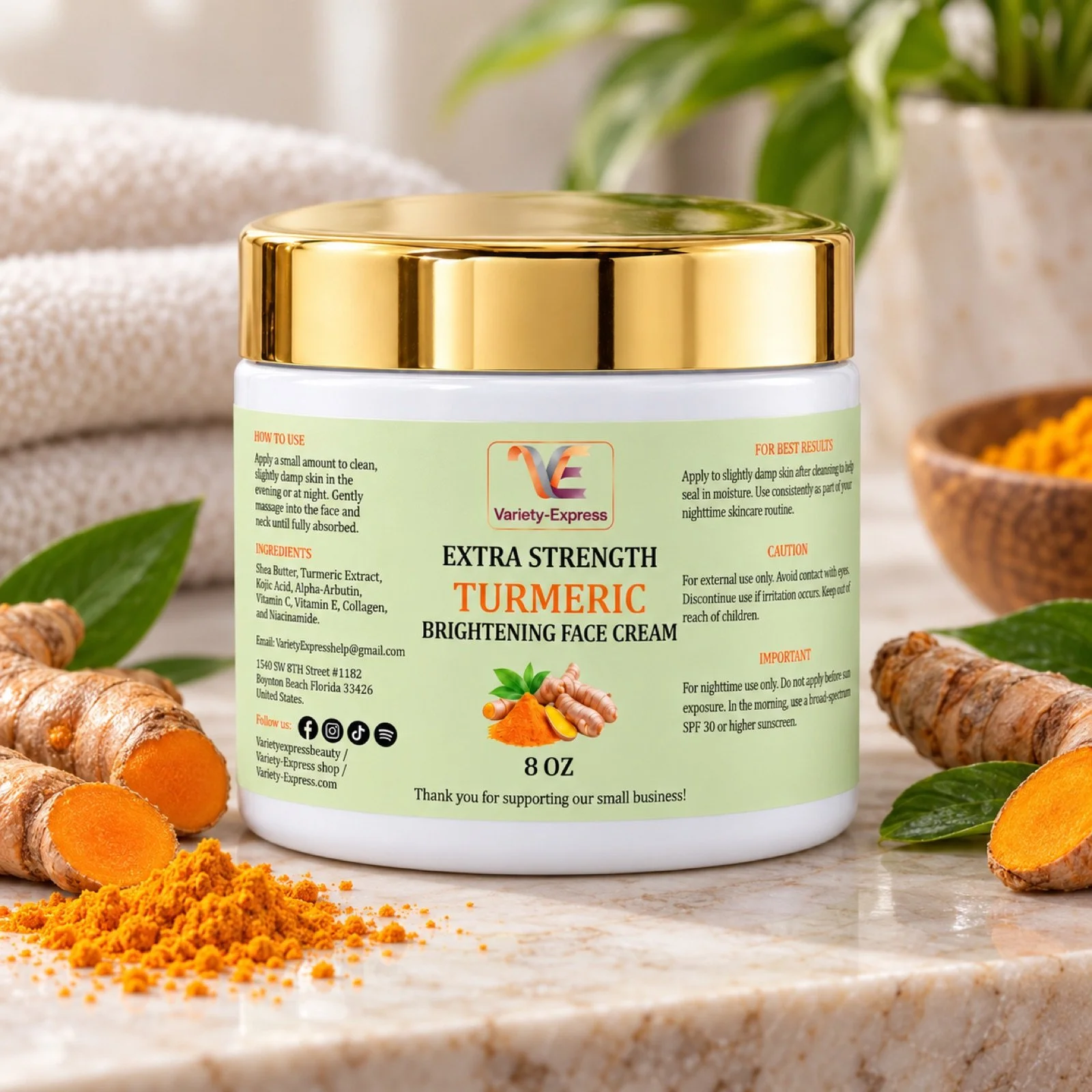
That's exactly why we didn't make "just" a turmeric cream. Our Extra Strength Turmeric Brightening Face Cream combines turmeric extract with kojic acid, alpha-arbutin, niacinamide and vitamins C + E, plus shea butter and collagen so skin stays soft instead of dry.
How to use turmeric cream for the best results
Use it at night. Apply a small amount to clean, slightly damp skin and massage into your face and neck.
Be consistent. Brightening ingredients work gradually. Think weeks, not days.
Wear sunscreen every morning. This is the step people skip, and it's the reason spots come back. Sun exposure darkens hyperpigmentation.
Patch test first if your skin is sensitive, and stop if you notice irritation.
Will turmeric stain my skin?
Turmeric powder can leave a yellow tint, which is why DIY masks get messy. Creams made with turmeric extract are formulated to absorb, so you get the benefits without looking like you just made curry.
The bottom line
Turmeric is a great glow ingredient, and it's even better when it's paired with proven brighteners. If dark spots are your main concern, look for a formula that combines turmeric with kojic acid, alpha-arbutin and niacinamide, use it nightly, and protect your progress with SPF.
Ready to start? Try the 4 oz Turmeric Face Cream, or go for the 8 oz jar if you already know you love it.
This article is for general education and isn't medical advice. If you have a skin condition, talk with a dermatologist.